The bottleneck was never information.
It was attention.
Roi spent nine years as a paramedic before becoming the patient. After years bedridden and dismissed by 33 doctors, he diagnosed himself with POTS, a condition that had been in front of every one of them.
Later an AI model identified it in seconds. Nobody had lacked the information. What was missing was someone paying attention.
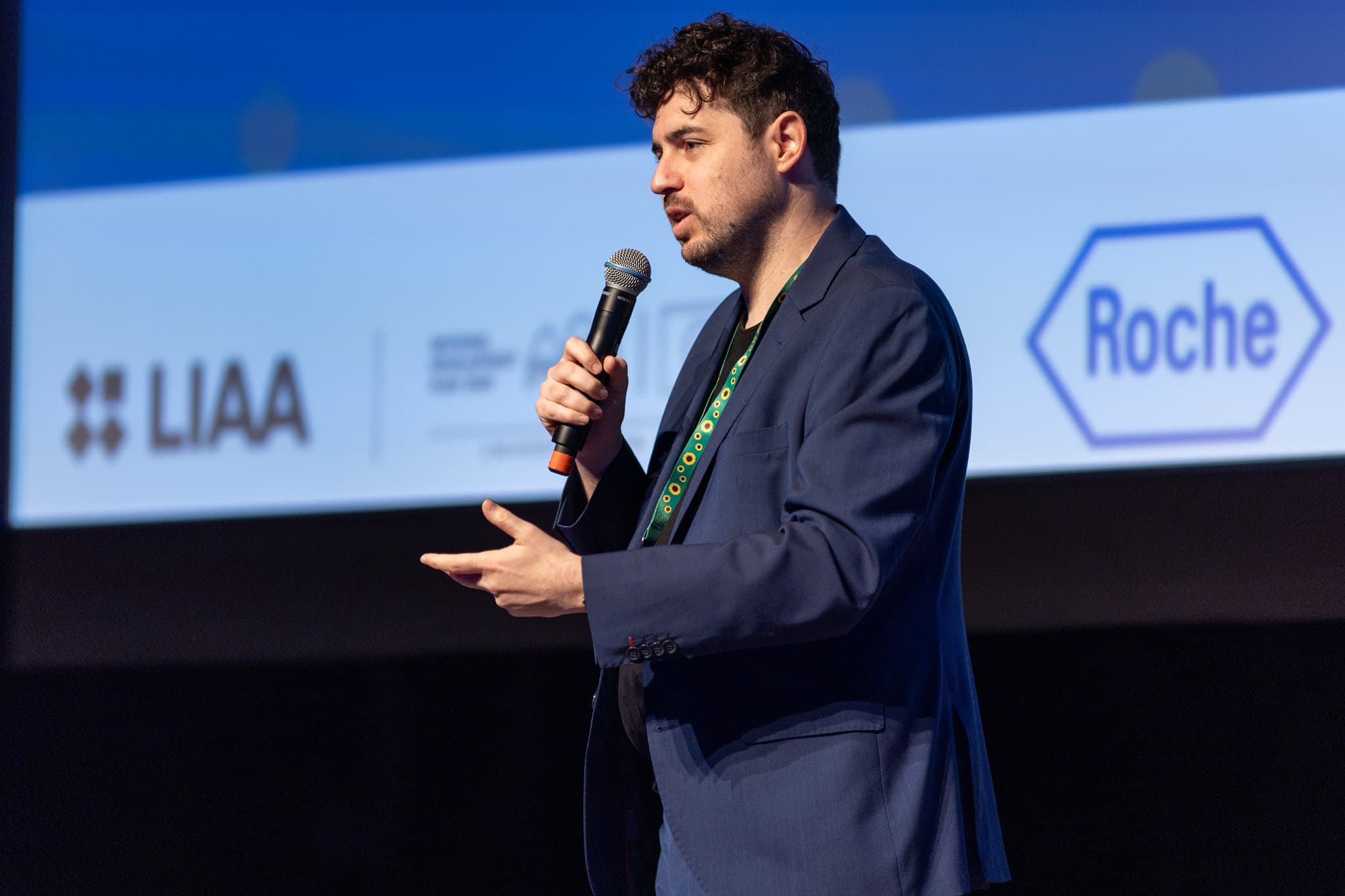
That is what the talks are about, and it is why they land differently. Roi is not describing what it costs to go unseen. He is doing the opposite of it, in the room, for the length of the talk.
Clinicians walk out and change something the same week. Medical students call it the most important lesson of their degree. A nurse quoted one line back long afterwards: “I look in your faces and know who you are. The others may not need it. I see you.”
He also builds. ClinicalAI, a working diagnostic tool that catches what those 33 doctors missed, won a Dell/NVIDIA Ambassador competition. It matters because the argument arrives with a working product rather than a prediction.
What should machines do — and what should remain deeply human?
What I do
Keynotes
Keynotes on AI in healthcare, patient experience, leadership and what remains human when information becomes free. 45 to 60 minutes, in English, German or Hebrew.
02Workshops & circles
The Honest Room. Half a day, ten to twelve people, no slides. A room where people stop performing. Also run as an open bi-weekly circle in Vienna.
03Advisory
Strategic work with healthcare, pharma, MedTech, founders and public-sector teams on patient experience, patient partnership and human-centered innovation.
04Teaching
Patient communication, medical education and healthcare experience training for clinicians, students and professional teams.
05Writing
Five books and a decade of essays on patient experience, chronic illness, healthcare systems, AI and human transformation.
06Building
Fifteen-plus ventures and platforms built for people the system fails to see, including ClinicalAI.
The method
Testimony-Based Presence
When one person in a room stops performing, publicly and at real cost, the room's permission structure collapses. People say the thing they came in not planning to say.
That is the whole method, built over twenty-five years of practice and named so it can be taught. It is not facilitation, coaching or therapy. The unit of change is the room, not the person.
It is also why a talk lands as something other than content. Plenty of people can brief a room on AI in healthcare. This is the part nobody else is doing.
What changes after
Most speaker feedback is about how a room felt. The feedback worth quoting is about what people did next.
I could immediately put the spirit into practice — the same evening with a patient.
This is the most important lesson I have had in medical school. Every future doctor should listen to Roi.
My personal take-home message is that I must never forget that behind every diagnosis stands a complex and multi-layered patient story.
I have never seen a speaker like you before.
My personal highlight was Roi Shternin and his keynote on 'Why Disabled and Chronically Ill People Might Be Our Best Employees'.
I am a changed man after this talk. I can't go back to unmindful living.
You absolutely rocked the stage. The colleagues highly appreciated your clear and meaningful speech.
Loved your keynote! 💜
I left with the feeling that I had grown on a human level.
The books
Five books.
One argument.
What patients actually experience. What the system believes they experience. And what it takes to close the gap.
All books →The Algorithm Will See You Now
2026
What AI can do in healthcare. What it cannot see. And the patients it will abandon if we don't ask harder questions.
Revolution From My Bed
2024
Ten years. 3,650 days. What patients actually do when medicine doesn't have an answer yet.
Booking questions, answered
What does Roi Shternin speak about?
AI in healthcare, patient experience, leadership under constraint, and what remains human when information becomes free. The talks are built to change what people do next: people consistently report treating someone differently within days. The lead keynote, Ten Seconds, follows one healthcare failure from three sides — the paramedic inside the system, the patient it missed for years, and the builder of the AI that caught it.
Which languages does Roi Shternin present in?
English, German and Hebrew — all three at keynote level, with no interpreter required.
Where is Roi Shternin based, and does he travel?
Vienna, Austria. He travels internationally and has spoken in 27 countries across Europe, the Middle East, Asia and the United States.
What audiences is he booked for?
Healthcare systems and hospital leadership, pharmaceutical and MedTech companies, digital health and AI conferences, medical faculties and clinical education, and corporate leadership, HR and DEI events.
What formats are available?
Keynote (45–60 minutes), half-day workshop (10–12 participants), fireside conversation (30–45 minutes), and multi-session advisory engagements.
How do I book Roi Shternin?
Send the event date, location, audience and desired outcome through the booking form at roishternin.com/booking. Enquiries are answered personally, usually within two working days. Bureau bookings are handled through A-Speakers.
Booking a speaker for a healthcare, pharma or leadership event?
Tell me the date, the room, and what you need it to do. I reply to every enquiry personally, usually within two working days.