About
The work began in a bed.
Seven years horizontal. Thirty-three doctors. A body that stopped working and a system that told me I was imagining it. I was a paramedic who couldn't walk. A teacher who couldn't sit up. A person who had spent his career helping other people name invisible things, now unable to name what was happening inside his own body.
I eventually diagnosed myself. POTS — Postural Orthostatic Tachycardia Syndrome. A real condition. A real explanation. Invisible to everyone who had looked.
That decade — being dismissed, disbelieved, and functionally erased by institutions that should have seen me — produced something I didn't expect: an allergy to rooms where people perform. I can feel it before I can name it. The moment someone says I'm fine and isn't. The moment a group agrees on something nobody believes.
I walk into those rooms now. And I go first.

The Methodology
Twenty-five years of practice across 27 countries, in classrooms and boardrooms and hospital corridors and conference halls, produced a methodology.
I've been an instructor since I was fifteen. A teacher. A paramedic trainer. A patient advocate. A workshop facilitator. A keynote speaker. At every stage, I arrived at the same place through a different door: the moment when a room full of people who came in performing left having said the thing they needed to say.
I've given that practice a name: Testimony-Based Presence.
The principle is simple. When one person in a room stops performing — publicly, embodied, at genuine cost — the room's permission structure collapses. People say things they came in not planning to say. They discover they're not alone in the specific shape of their stuck. Something moves that was blocked before.
That's the methodology. The container is The Honest Room.
The Work
The Honest Room
In four formats — Meetup, Intensive, Corporate, Continuum. The primary container. The place where the work lives.
Learn more →
Keynotes
TBP at scale. 45–60 minutes. For when the room is 500 people instead of 12. The methodology doesn't change. The intimacy compresses.
Learn more →
Consulting
The methodology applied to organizations. Organizational diagnostics, performance culture advisory, patient experience work. For systems where the gap between what's said and what's true is costing more than anyone is admitting.
Learn more →
Writing
Seven books. The written tradition behind the institute. The next book is in development: a trade-accessible account of Testimony-Based Presence for general audiences.
Learn more →
The Institutional Context
The Organizations Founded
Roi has founded seven organizations across patient advocacy, health technology, and education:
Dysautonomia Israel·The Patient School·Chronically·Bedcoders·Spooniversity·Spoons.world·Project Hearts
The Lineage
This work belongs to a tradition.
Martin Buber distinguished the teacher who transmits from the witness who testifies. Roi studied Buber in two university courses and has been practicing I-Thou encounter at room scale ever since — without knowing it had a name.
David Bohm, William Isaacs, Edgar Schein, Carl Rogers, and Otto Scharmer each contributed to the intellectual foundation that TBP draws on.
The full academic paper on Testimony-Based Presence is available on request.
The Personal
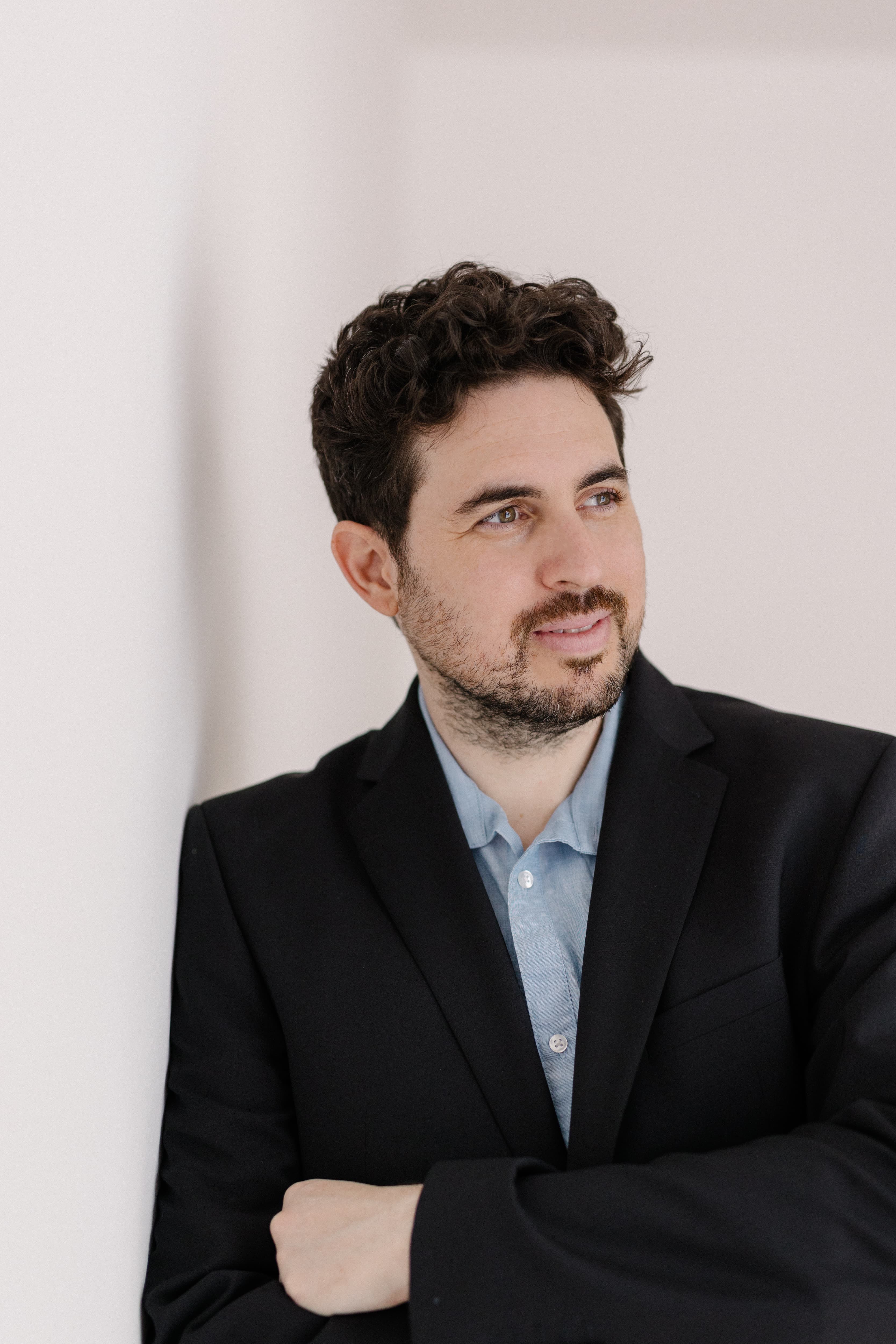
Roi Sternin lives in Bruck an der Leitha, Lower Austria, with his wife Theresa and their daughter.
He speaks English, German, and Hebrew. He has spoken in 27 countries. He has authored seven books. He is a nine-year veteran of emergency medical services in Israel.
He runs sprechcoaching.com with Theresa.
He was born in Israel. He lives in Austria. The work travels.
Ready to be in the room?